
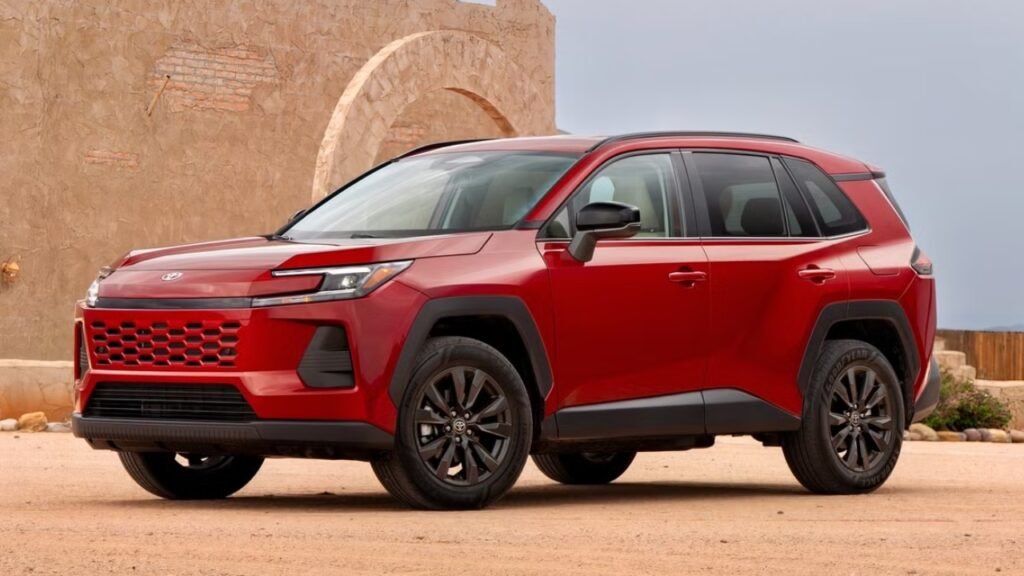
2026 Toyota RAV4 Goes Hybrid-Only: Here’s What’s New in the Lineup
Toyota is giving one of its best-known SUVs a major rethink for 2026. The new Toyota RAV4 moves into a new generation with a lineup built entirely around electrified powertrains, marking a significant change for a model that has traditionally offered conventional gasoline power alongside hybrid choices.
For shoppers who have followed the RAV4 for years, the biggest story is simple: the gasoline-only version is gone. Instead, Toyota is focusing on hybrid and plug-in hybrid technology, while also giving the SUV a more modern design, updated cabin and a stronger emphasis on technology.
The change comes as buyers increasingly look for better fuel economy without giving up the practicality expected from a compact SUV. With the 2026 RAV4, Toyota is betting that electrification can become the standard rather than an alternative.
A Hybrid-Only RAV4 Lineup
The most important change for 2026 is the powertrain strategy. Toyota has removed the traditional gas-only model from the lineup and replaced it with a range centered on hybrid technology.
The standard hybrid system is designed to combine a gasoline engine with electric motors, giving the RAV4 the ability to deliver stronger efficiency than a conventional gasoline SUV. Depending on configuration, buyers can also choose all-wheel drive, making the RAV4 suitable for drivers who regularly deal with rain, snow or rougher roads.
For customers who want even more electric capability, Toyota continues to offer a plug-in hybrid version. This setup adds the ability to travel on electric power for shorter trips before switching to its gasoline-electric hybrid system for longer journeys.
That gives the RAV4 lineup a broader electrified identity without forcing every buyer into a fully electric vehicle.
Fresh Styling Gives the RAV4 a New Identity
Toyota has also redesigned the RAV4 for 2026. While the new SUV remains recognizable as a RAV4, its exterior has a more contemporary appearance and a stronger connection to Toyota’s latest design language.
The front end receives a cleaner and more purposeful look, while the overall shape continues to prioritize the upright proportions that have helped make the RAV4 popular with families.
Design changes are not simply about appearance, either. Modern SUVs have to balance road presence with practicality, and Toyota has retained the useful dimensions and everyday usability that RAV4 buyers expect.
Different trims also bring their own visual personalities. Depending on the version, buyers can find more rugged styling, sportier details or a more upscale appearance.
Technology Takes a Bigger Role Inside
Step inside the 2026 RAV4 and the transformation becomes even more noticeable. Toyota has updated the dashboard and introduced a more technology-focused cabin, giving the SUV a more modern feel.
A larger central touchscreen becomes a key part of the interior experience, while digital displays provide drivers with information about the vehicle and its electrified powertrain.
Connectivity is another major focus. Smartphone integration, navigation features and connected services are designed to make the RAV4 easier to use during daily driving.
Toyota is also putting greater emphasis on software and digital functionality. That is an important shift because modern vehicle ownership is increasingly about more than mechanical hardware. Drivers now expect their vehicles to work seamlessly with their phones and provide frequent software improvements.
Hybrid Performance Without Changing the RAV4 Formula
One of the interesting aspects of the 2026 RAV4 is that Toyota has not abandoned the qualities that made the SUV successful in the first place.
The RAV4 remains focused on everyday practicality rather than becoming a performance-oriented crossover. Its hybrid powertrain is intended to provide a useful combination of efficiency, smooth acceleration and easy drivability.
For many owners, that formula makes sense. A compact SUV needs to handle commuting during the week, shopping trips, family duties and longer road trips without demanding major changes to the way it is driven.
The hybrid system can also recover energy during deceleration and braking, helping improve overall efficiency. Instead of requiring drivers to manage charging on every trip, the conventional hybrid system handles much of that process automatically.
Plug-In Hybrid Adds More Flexibility
The plug-in hybrid RAV4 offers a different approach for buyers who have access to regular charging.
Because it has a larger battery than the standard hybrid, the plug-in version can cover some daily journeys using electric power alone. Once the battery’s usable electric range is depleted, the vehicle can continue operating as a hybrid.
That makes the plug-in model particularly interesting for drivers whose daily commute is relatively short but who still want the freedom to take longer road trips without relying exclusively on charging stations.
It also gives buyers an electrified option without requiring the full transition to a battery-electric SUV.
More Choices Across the Trim Range
Although the 2026 RAV4 has a simplified powertrain strategy, Toyota still offers variety through different trims and configurations.
Some versions focus more heavily on comfort and technology, while others emphasize rugged styling and adventure-oriented features. This approach allows Toyota to target different types of SUV buyers while keeping the underlying electrified philosophy consistent.
All-wheel drive availability is also an important part of the lineup. For drivers who want additional traction, it provides another reason to consider a hybrid RAV4 rather than a smaller front-wheel-drive crossover.
The result is a lineup that is technically more focused but still offers different personalities.
What the Change Means for Buyers
The move to a hybrid-only lineup could change the way shoppers compare the RAV4 with competing compact SUVs.
Previously, buyers who wanted the lowest upfront cost could choose a gasoline model and avoid paying extra for hybrid technology. For 2026, that choice disappears in markets where Toyota has adopted the hybrid-only strategy.
In return, buyers get electrification as standard equipment rather than something reserved for a higher-priced version.
For people who drive frequently, the potential fuel savings of a hybrid system may become an important part of the ownership equation. However, actual fuel economy and running costs will depend on the specific configuration, driving conditions and local fuel and electricity prices.
A Significant Step for Toyota’s Best-Known SUV
The 2026 Toyota RAV4 represents more than a routine redesign. By moving away from a conventional gasoline-only lineup, Toyota is changing the basic formula of one of its most recognizable SUVs.
The new generation combines hybrid powertrains, plug-in hybrid technology, updated styling and a more digital interior while maintaining the practical character that has defined the RAV4.
For existing RAV4 owners, the biggest adjustment may be the disappearance of the traditional gasoline option. For new buyers, however, the change creates a lineup where electrification is built into the SUV from the beginning.
As compact SUVs continue to evolve, the 2026 RAV4 shows how quickly hybrid technology is moving from an optional feature to the central part of a vehicle’s identity.
