
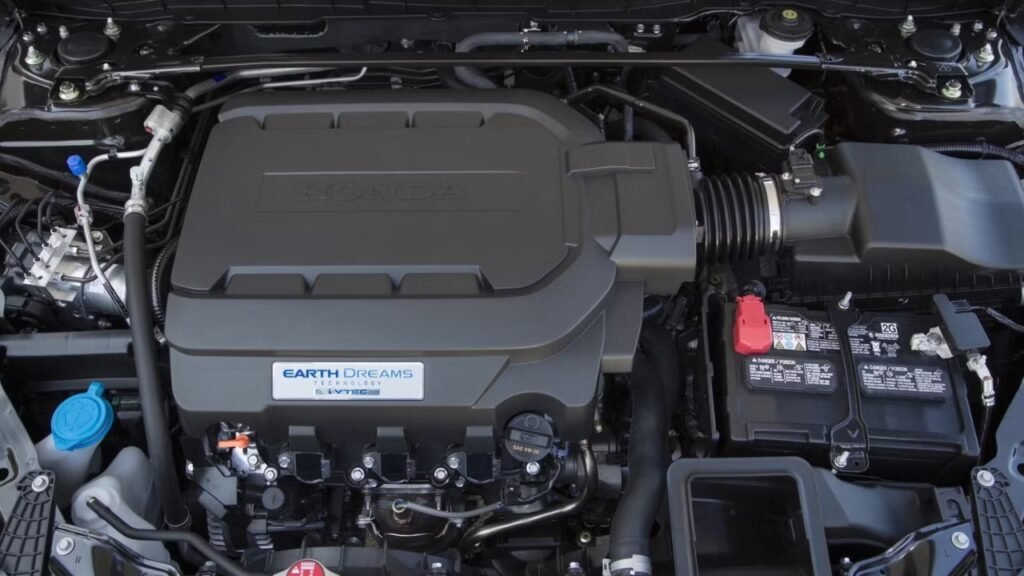
The Honda Engine That Turned 300,000 Miles Into a Routine
Most people start getting nervous when a car gets close to 200,000 miles. They begin wondering how much longer the engine will last, whether a major repair is around the corner, or if it is finally time to replace the car.
Honda owners, however, have often looked at that number a little differently.
For some of them, 200,000 miles is not the end of the story. It is simply another milestone. There are Honda cars that have gone well beyond 250,000 miles, with some reaching the 300,000-mile mark while still being used as everyday transportation.
That kind of mileage does not come from luck alone. It comes from a combination of good engineering, regular maintenance, sensible driving, and, in many cases, an engine that was simply built to take a lot of punishment over the years.
What Makes A Honda Engine So Durable
There is no single secret part hiding inside a Honda engine that explains its reputation for lasting so long.
The real difference is usually in the way everything works together.
Honda has spent decades developing engines that are compact, efficient, and capable of producing useful power without needing to be pushed constantly to their limits. Many of its older engines were also relatively straightforward compared with some modern powerplants, which made them easier to service and repair.
That simplicity matters when a car gets older.
An engine that has been on the road for 15 or 20 years is going to need attention eventually. Seals wear out, sensors fail, hoses become brittle, and different components need replacing. But if the basic engine remains healthy, owners can repair those smaller problems instead of immediately looking for another vehicle.
That is one reason some old Hondas stay on the road for such a surprisingly long time.
How Regular Maintenance Keeps The Engine Alive
A reliable engine still needs an owner who takes care of it.
This is probably the least exciting part of the 300,000-mile story, but it is also one of the most important. There is nothing glamorous about changing engine oil or checking coolant levels. Yet those simple jobs can make a huge difference over many years.
Oil keeps the engine’s moving parts properly lubricated. As the miles add up, old oil becomes contaminated and gradually loses some of its ability to protect those components. Keeping up with oil changes helps reduce unnecessary internal wear.
The cooling system deserves the same attention. An engine can survive a lot of miles, but repeated overheating is a completely different story. A neglected radiator, leaking hose, failing thermostat, or weak water pump can turn a small problem into a very expensive engine repair.
The same goes for spark plugs, filters, belts, fluids, and other maintenance items. None of them individually explains 300,000 miles. Together, they can make reaching that mileage much more realistic.
When A Honda Starts Showing Its Age
There is an important detail people sometimes forget when they hear about a Honda with 300,000 miles.
The engine may still be strong, but the rest of the car has also traveled those same 300,000 miles.
Suspension components can wear out. Wheel bearings can become noisy. Rubber bushings can crack. Alternators, air-conditioning components, sensors, and electrical parts may eventually need attention.
So, owning a 300,000-mile Honda does not necessarily mean owning a trouble-free car. It usually means owning a car whose major mechanical foundation has lasted exceptionally well.
Maintenance history is also far more important than the number on the odometer.
A carefully maintained Honda with 250,000 miles could be in better mechanical condition than a neglected example with half that mileage. Mileage tells you how far the car has traveled. It does not tell you how it was treated.
What Made Older Honda Engines So Popular
Honda’s reputation for high-mileage engines grew over many years.
Models such as the Civic and Accord became familiar sights on roads around the world, and many owners discovered that their cars could keep going long after the mileage that once seemed impressive.
Older Honda engines also became popular among enthusiasts and independent mechanics. Parts were generally available, there was plenty of mechanical knowledge surrounding common engines, and many repairs could be handled without extraordinary equipment.
That made keeping an older Honda alive a practical option.
Instead of making a monthly car payment on something newer, an owner could sometimes spend money maintaining a familiar vehicle that already had a long service history.
Of course, not every engine from every generation has the same reputation or reliability record. Different designs have different strengths and known issues. That is why a specific engine and model year should always be considered rather than assuming every Honda will reach 300,000 miles.
How Driving Habits Can Add Years To An Engine
The way a car is driven matters more than many people realize.
Constantly accelerating hard with a cold engine, ignoring strange noises, driving with low oil, or continuing to drive after an overheating warning can cause serious damage. Even a well-built Honda engine cannot survive unlimited neglect.
Good habits do not have to be complicated.
Give the engine a little time to reach normal operating temperature. Pay attention when something sounds or feels different. Deal with warning lights instead of covering them up. Check fluid levels when necessary. And if the car starts behaving differently, investigate the problem before it becomes a much larger repair.
Long highway trips can also be relatively easy on an engine because the vehicle spends more time operating at a steady speed and temperature. But highway mileage is not automatically harmless. Maintenance still makes the biggest difference.
What 300,000 Miles Really Means For A Honda
Seeing 300,000 miles on an odometer is impressive, but it should not create the idea that every Honda engine is capable of reaching that number without major work.
Modern engines have become more sophisticated. Technologies such as turbocharging, direct injection, advanced emissions systems, and increasingly complex electronics can change the maintenance picture compared with older Honda engines.
Still, the basic lesson has not changed.
A well-designed engine that receives proper maintenance can remain useful for a remarkably long time.
And perhaps that is what makes the high-mileage Honda story so interesting. There is usually no dramatic moment when the engine suddenly becomes a 300,000-mile engine. It happens gradually.
One oil change follows another. A worn belt gets replaced. A coolant leak is repaired. A strange noise gets checked instead of ignored. Tires and suspension parts are replaced when needed. Years pass, and the odometer keeps moving.
How A Honda Reaches 300,000 Miles
In the end, there is no magic formula.
A Honda reaches extremely high mileage through thousands of small decisions made over many years. Good engineering gives the engine a strong starting point, but maintenance and ownership habits determine how much of that potential is actually used.
That is why 300,000 miles can almost seem routine when you look at the right Honda.
The car does not need to be perfect. It does not need to avoid every repair. And it certainly does not need to look new.
It simply needs an engine that was built well, an owner willing to take care of it, and enough consistency to keep small problems from becoming major ones.
Three hundred thousand miles sounds like an extraordinary number. For some Honda owners, though, it is simply the result of doing the ordinary things right for a very long time.
