
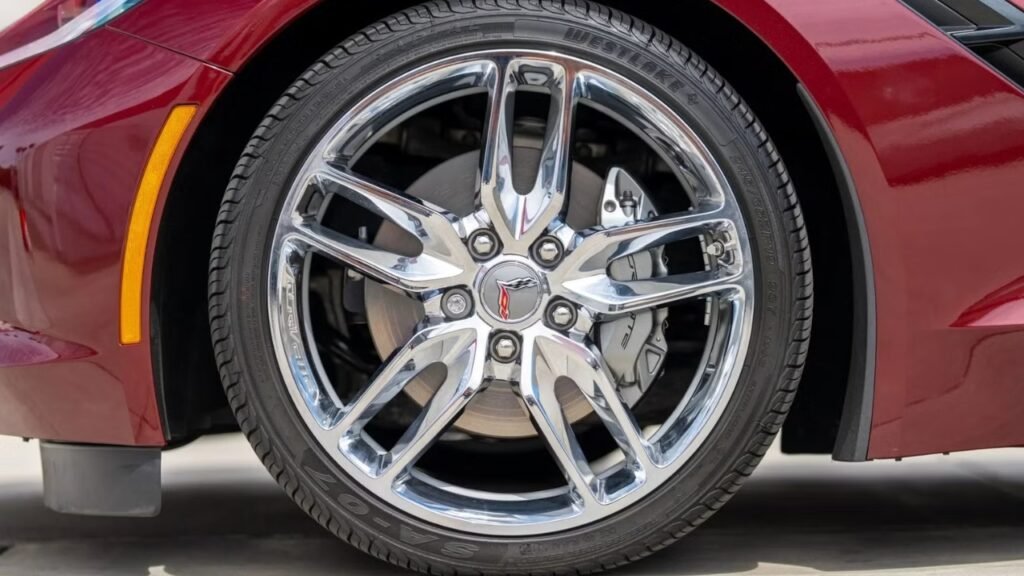
This Chevrolet Corvette Generation Still Delivers Incredible Performance for the Money
For decades, the Chevrolet Corvette has represented an unusual combination of American muscle, sports-car performance, and everyday usability. While newer generations have pushed the nameplate into increasingly sophisticated territory, one generation continues to stand out for drivers who want serious performance without spending exotic-car money. The C6 Chevrolet Corvette, produced from 2005 through 2013, remains an especially compelling choice for enthusiasts who care about speed, character, and value.
The C6 arrived at a time when Chevrolet was refining the Corvette formula without completely abandoning its traditional identity. It was lighter and more compact than the C5, received a cleaner exterior design, and introduced a range of powerful LS-series V8 engines. Even today, those qualities help the C6 feel remarkably relevant.
A Corvette That Got the Fundamentals Right
The sixth-generation Corvette focused heavily on performance fundamentals. Instead of relying on excessive weight or complicated technology, Chevrolet gave the C6 a lightweight structure, rear-wheel drive, a front-mounted V8, and a suspension designed to make the most of the available power.
The result was a sports car that could feel comfortable during normal driving but become genuinely serious when the road opened up. That versatility remains one of the C6’s biggest attractions.
Its styling has also aged well. The body is unmistakably Corvette, yet it avoids some of the exaggerated details found on certain modern performance cars. The proportions are low and wide, while the long hood and short rear deck reinforce its classic front-engine sports-car character.
The LS2 and LS3 V8s Deliver the Real Appeal
One of the biggest reasons the C6 remains desirable is what sits beneath its hood. Early standard models used the 6.0-liter LS2 V8, while later cars received the larger 6.2-liter LS3.
The LS2 produced roughly 400 horsepower, which was already enough to make the Corvette seriously quick. The later LS3 increased output to around 430 horsepower in standard form, with certain configurations offering even more.
What makes these engines particularly appealing is their character. They deliver strong torque throughout the rev range, making acceleration effortless. You do not have to constantly chase the redline to enjoy the engine. A press of the throttle is usually enough to remind you that this is a genuine performance machine.
The LS engine family also has a reputation for being relatively straightforward compared with many modern high-performance powertrains. That simplicity is valuable to owners who prefer mechanical accessibility and a broad aftermarket.
Performance That Still Feels Modern
Numbers alone do not tell the whole story, but the C6’s performance figures remain impressive. Depending on the specific model, transmission, tires, and conditions, a properly equipped Corvette can accelerate from zero to 60 mph in around the mid-four-second range or quicker.
That level of acceleration is still enough to put the car in serious sports-car territory.
More importantly, the Corvette was not designed simply for straight-line speed. Its chassis gives the driver a balanced platform for corners, while the low weight helps it feel more responsive than many larger performance cars.
The C6 also benefits from a relatively simple driving experience. There is less electronic interference than you might encounter in a newer performance vehicle, allowing the driver to feel more directly connected to the car.
Different C6 Models Offer Different Personalities
The standard Corvette is only part of the story. Chevrolet expanded the C6 range with several increasingly capable versions, giving buyers plenty of choices.
The Corvette Z06 is perhaps the most famous. Introduced for the 2006 model year, it featured a 7.0-liter LS7 V8 producing 505 horsepower. Lightweight construction and extensive performance upgrades transformed it into a track-capable machine while retaining its road-going character.
Later came the Corvette ZR1, which took the formula even further. Its supercharged 6.2-liter LS9 V8 produced an extraordinary 638 horsepower, placing it in a completely different performance category.
There was also the Grand Sport, which combined several features inspired by the Z06 with the standard Corvette’s engine. For many enthusiasts, this created an attractive balance between everyday usability and track-focused hardware.
Because of these variations, the C6 market has something for drivers with very different priorities and budgets.
Why the C6 Can Be Such a Strong Value
The Corvette’s value proposition has always been an important part of its appeal. When new, the C6 offered performance that could challenge considerably more expensive European sports cars. On the used market, that equation can become even more interesting.
A well-maintained standard C6 can provide serious acceleration, a naturally aspirated V8 soundtrack, rear-wheel-drive handling, and genuine sports-car proportions without requiring the budget associated with many newer performance models.
Of course, purchase price is only one part of ownership costs. Insurance, tires, brakes, suspension components, and deferred maintenance should all be considered when shopping for an older performance car.
The condition of the individual Corvette is often more important than simply finding the lowest asking price.
What Buyers Should Check Before Purchasing
Age matters when shopping for any C6. Even though the LS engines can be durable, a used Corvette may have experienced years of hard driving, modifications, or inconsistent maintenance.
A pre-purchase inspection is therefore worth the money. Buyers should pay attention to the clutch on manual-transmission cars, transmission behavior, suspension components, brakes, cooling systems, electrical equipment, and evidence of accident repairs.
The car’s history is also important. A Corvette that has spent its life carefully maintained on the road is a very different proposition from one that has regularly seen track use without appropriate maintenance.
Modified examples can be appealing, but factory-original or professionally upgraded cars may be easier to evaluate.
The Interior Shows the Corvette’s Age
There is one area where the C6 clearly reveals its age: the cabin. Compared with today’s sports cars, its dashboard design and materials are relatively simple.
That is not necessarily a deal breaker. Some enthusiasts actually prefer the straightforward layout and physical controls. The seats can provide good support, and the Corvette’s hatchback-style rear storage area makes it considerably more practical than its exterior might suggest.
Still, buyers expecting the digital displays, advanced driver assistance systems, and premium cabin materials of a modern sports car may find the C6 dated.
A Sports Car That Still Makes Sense
The Chevrolet Corvette C6 occupies an interesting place in the sports-car world. It is old enough to have depreciated significantly from its original price, yet powerful and capable enough to remain exciting by modern standards.
Its naturally aspirated V8 engines provide strong performance and an unmistakable soundtrack, while the lightweight chassis keeps the driving experience engaging. Add reasonable practicality and a large enthusiast community, and the C6 becomes more than just an inexpensive way to own a fast car.
For someone shopping for a used performance vehicle, the C6 deserves attention because it demonstrates how much performance can be packed into a relatively straightforward package. It may lack the technology and refinement of the latest Corvette, but that simplicity is part of its charm.
The C6 Corvette ultimately represents a period when Chevrolet managed to combine big-engine character, genuine sports-car capability, and everyday usability into one package. For enthusiasts who value the experience behind the wheel as much as the latest equipment, that formula still has plenty of life left in it.
