
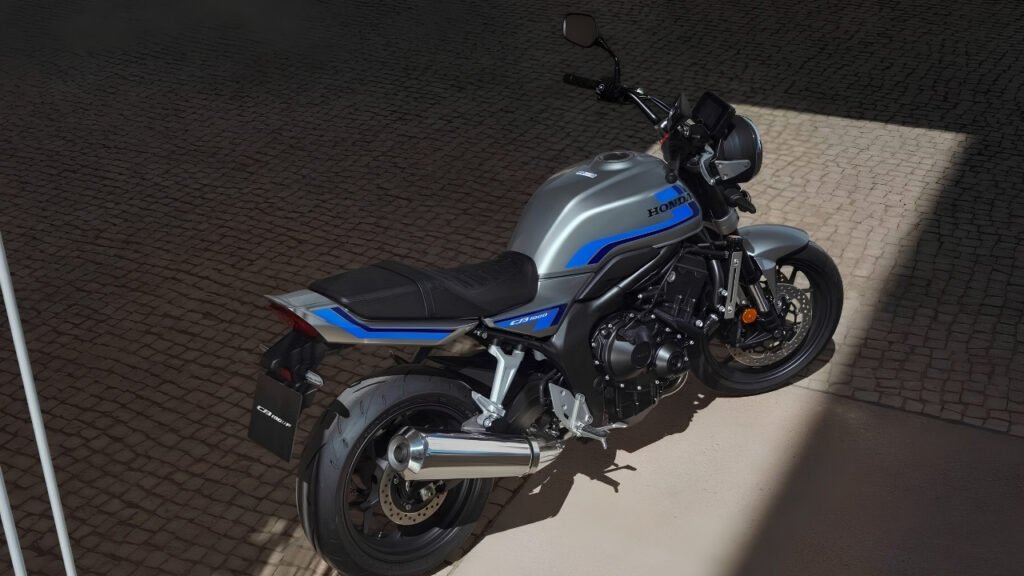
2026 Honda CB1000F Unveiled: Classic Streetfighter Style Meets Serious New-Gen Performance
The 2026 Honda CB1000F brings a fresh interpretation of the modern streetfighter formula, blending the visual character of Honda’s classic naked motorcycles with the technology and performance expected from a new-generation machine. Instead of chasing an overly aggressive design, Honda has focused on creating a motorcycle that feels muscular, purposeful, and unmistakably connected to the CB family.
With its compact proportions, exposed mechanical elements, upright riding position, and powerful four-cylinder character, the CB1000F is aimed at riders who want performance without giving up everyday usability. It sits in an interesting space where old-school motorcycle appeal meets contemporary engineering.
What Makes the 2026 Honda CB1000F Stand Out
The biggest attraction of the CB1000F is its design philosophy. Honda has avoided making the motorcycle look excessively complicated, giving it a cleaner appearance that recalls the straightforward attitude of traditional streetfighters.
The fuel tank has a strong, sculpted shape, while the compact tail section gives the motorcycle a purposeful stance. The exposed engine and minimal bodywork reinforce its naked-bike identity. At the front, the compact headlight arrangement gives the CB1000F a distinctive face without making the design unnecessarily busy.
This approach could appeal strongly to riders who appreciate motorcycles that look mechanical rather than heavily covered in aerodynamic panels. The CB1000F manages to appear modern while retaining enough visual simplicity to connect with Honda’s older CB models.
How Honda Has Reworked the Performance Formula
Performance is where the CB1000F moves well beyond its classic inspiration. The motorcycle is built around a modern liquid-cooled inline-four engine, a configuration that has long been associated with Honda’s smooth power delivery and high-revving character.
An inline-four engine gives a motorcycle a very different personality compared with a twin-cylinder or single-cylinder setup. Power builds progressively, the engine remains refined at cruising speeds, and the upper portion of the rev range can deliver a much more dramatic experience.
For everyday riding, that flexibility matters. A rider can use the motorcycle around town without constantly working through the gearbox, while open roads provide an opportunity to explore the engine’s stronger performance.
Honda’s goal with a motorcycle like this is not simply to produce a large horsepower number. The broader appeal comes from combining acceleration, refinement, usable mid-range performance, and an engine character that makes every ride feel engaging.
What the Chassis Brings to the Street
A powerful engine only works when the chassis can make that performance manageable. The CB1000F uses a lightweight-looking naked-bike architecture designed around agility and stability rather than outright track-focused behavior.
The upright riding position should make the motorcycle comfortable for a wide variety of road conditions. Riders get a commanding view of traffic, while the relatively compact dimensions help the bike feel approachable when moving through urban environments.
Suspension setup is another important part of the package. A modern performance-oriented naked bike needs enough control for fast cornering while still absorbing imperfections on normal roads. That balance is particularly important for riders who intend to use the CB1000F as a daily motorcycle rather than a weekend-only machine.
The braking system also plays an important role in delivering confidence. Strong braking hardware, combined with electronic rider aids, can help the motorcycle remain predictable when the pace increases.
How Technology Changes the Riding Experience
Modern Honda motorcycles increasingly rely on electronics to make performance easier to manage, and the CB1000F follows that direction. Rider-focused technology can include selectable riding modes, traction management, engine-braking control, and other electronic assistance depending on the market specification.
These systems are particularly useful on a motorcycle with substantial performance. Instead of making the bike feel less exciting, carefully calibrated electronics can allow riders to explore its capabilities with greater control.
A modern digital instrument display also adds convenience. Riders can monitor riding information without taking their attention away from the road for long periods. The technology is there to support the experience rather than dominate it.
What the Riding Position Says About the CB1000F
The riding position is one of the reasons naked motorcycles remain popular. Compared with a fully faired sportbike, the CB1000F provides a more upright posture that can be easier on the wrists and more practical during everyday riding.
The wide handlebar should give the rider useful leverage when changing direction, while the relatively compact bodywork keeps the motorcycle feeling responsive. At the same time, the seating arrangement is designed to accommodate real-world riding rather than only aggressive cornering.
That makes the CB1000F an interesting proposition for riders who want a motorcycle capable of weekend blasts without turning every commute into a physical workout.
How the Classic CB Influence Appears in the Details
Honda’s CB name carries decades of history, and the new motorcycle clearly benefits from that heritage. The designers have incorporated traditional naked-bike cues while avoiding a simple retro reproduction.
The proportions are contemporary, the mechanical components are modern, and the overall stance has the visual tension expected from a current streetfighter. Yet details such as the tank shape, exposed engine, compact rear section, and minimalist front end help establish a connection with Honda’s classic road motorcycles.
This combination is becoming increasingly important in the premium motorcycle market. Many riders want modern reliability and technology but do not necessarily want a motorcycle that looks like a piece of futuristic machinery.
What Everyday Ownership Could Look Like
The CB1000F is not only about acceleration and aggressive styling. Its greatest strength could be its versatility.
A rider can use a motorcycle in this class for commuting, highway travel, weekend rides, and occasional spirited cornering. The upright ergonomics make longer journeys more practical, while the four-cylinder engine provides enough performance to keep experienced riders interested.
Fuel economy, service requirements, insurance costs, and equipment levels will naturally influence ownership expenses, and these details can vary between markets. Still, Honda’s reputation for producing durable road motorcycles is an important part of the CB1000F’s appeal.
How the 2026 CB1000F Fits Into the Modern Streetfighter Market
The modern streetfighter category has become extremely competitive. Riders can choose from motorcycles emphasizing outright performance, lightweight handling, electronics, retro styling, or long-distance comfort.
The CB1000F takes a somewhat broader approach. Rather than focusing entirely on one characteristic, it attempts to combine traditional Honda character with contemporary performance and technology.
That could make it appealing to riders moving up from smaller naked motorcycles as well as experienced motorcyclists searching for a versatile four-cylinder machine.
What Riders Can Expect From the New Honda
The 2026 Honda CB1000F represents a continuation of an idea that has remained relevant for generations: a straightforward motorcycle can still be exciting.
Its classic-inspired appearance gives it personality, while the modern engine, chassis, electronics, and braking technology bring it firmly into the current era. Instead of treating heritage and performance as separate concepts, Honda has combined them into one package.
For riders who enjoy the sound and feel of a four-cylinder engine, prefer an upright riding position, and want a motorcycle with a strong mechanical presence, the CB1000F offers an interesting new option.
Ultimately, its appeal is likely to come from the balance between the familiar and the new. It looks like a motorcycle with history behind it, but its performance philosophy belongs to today’s generation.
