
Kawasaki’s New Ninja Brings Sportbike Style Within Reach of New Riders
Kawasaki has long been associated with motorcycles that look fast even when they are standing still. The Ninja name, in particular, carries a strong connection with sharp styling, sporty performance and the excitement of riding a fully faired motorcycle. But for someone buying a first sportbike, stepping into that world can sometimes feel like a bigger commitment than expected.
That is where the Ninja 500 finds its place.
Rather than chasing huge horsepower figures or extreme track-focused performance, Kawasaki’s middleweight Ninja focuses on making the sportbike experience easier to approach. It has the aggressive appearance riders expect from the Ninja family, but its compact engine and relatively manageable proportions make it a more sensible option for riders who are still developing their skills.
The result is a motorcycle that does not scream “entry-level” from every angle. Instead, it gives new riders the opportunity to own something that looks and feels like a genuine sportbike while leaving plenty of room to learn.
What Gives the Ninja 500 Its Sportbike Appeal
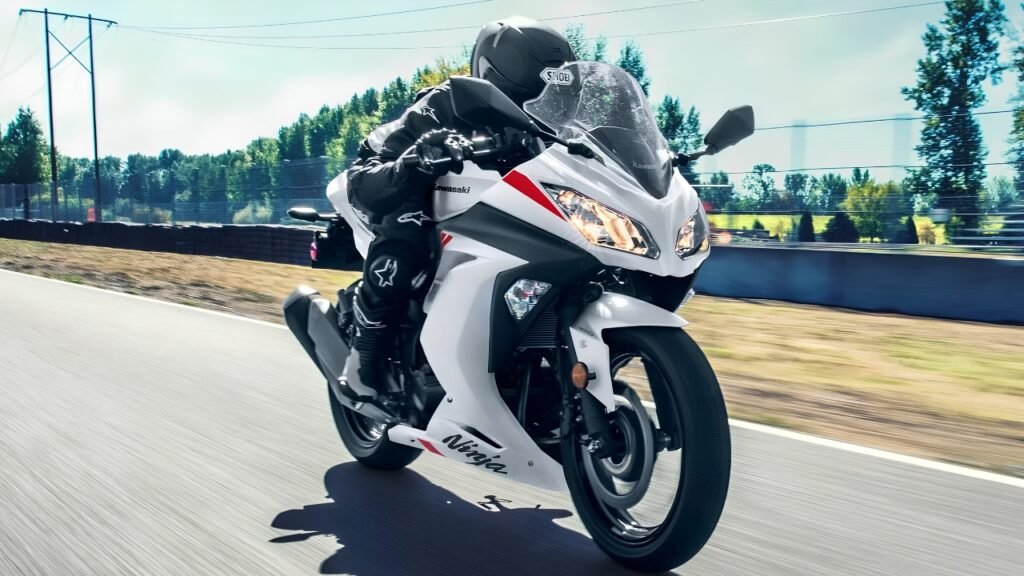
The first thing people are likely to notice is the styling. Kawasaki has given the Ninja 500 the visual attitude associated with its larger siblings, including a low-slung profile, aerodynamic fairings and a compact front end.
This matters more than it might seem. A first motorcycle is often an emotional purchase as much as a practical one. Riders want something they are excited to see parked in the garage and eager to ride on the weekend. The Ninja 500 addresses that desire without requiring the buyer to jump directly into a high-powered supersport.
Its design also makes the motorcycle feel larger and more substantial than its engine displacement might suggest. That gives it a distinctive advantage over basic commuter motorcycles that prioritize practicality above visual drama.
For a rider who has always wanted a Ninja, the 500 provides a path into that experience without immediately moving toward Kawasaki’s more demanding performance machines.
How Its Engine Makes Everyday Riding More Approachable
Power delivery is one of the most important characteristics for a new rider. An engine with too much immediate performance can make mistakes more difficult to manage, while an engine that feels underpowered can quickly become frustrating once the rider gains experience.
The Ninja 500’s 451cc parallel-twin engine sits between those extremes. Its power is sufficient for city riding, open roads and highway travel, while the two-cylinder configuration gives it a useful balance of responsiveness and everyday usability.
Instead of requiring the rider to constantly chase high revs to make progress, the engine provides a broad enough range of usable performance for normal riding. That can make learning smoother because the rider can concentrate on developing technique rather than constantly managing excessive power.
The six-speed transmission adds another layer of flexibility. New riders can gradually become comfortable with shifting, engine braking and clutch control while having enough gears to keep the motorcycle relaxed during faster road riding.
What Makes Its Size Friendly for New Motorcyclists
Engine output is only one part of the beginner-friendly equation. A motorcycle’s physical size can have an equally important effect on confidence.
The Ninja 500 is relatively compact, which can make it easier to maneuver through parking lots, narrow streets and slow-moving traffic. Those are precisely the situations where inexperienced riders can feel less comfortable.
Its approachable seat height is another advantage. Being able to get a secure footing when stopping can make a noticeable difference during the early stages of ownership. It can also reduce some of the anxiety that comes with balancing a motorcycle at low speeds.
The bike’s weight is kept within a reasonable range for its class as well. A lighter motorcycle generally requires less effort when making tight turns, pushing the bike around a garage or recovering from an awkward stop.
These characteristics do not make the Ninja 500 automatically suitable for every rider, but they contribute to a package that is less intimidating than many larger sportbikes.
When the Chassis Starts to Matter More Than Horsepower
Once riders become comfortable with basic controls, handling becomes one of the most enjoyable parts of motorcycling. The Ninja 500 is designed to offer that experience without demanding expert-level commitment.
Its trellis-style frame, conventional front suspension and rear suspension setup give the motorcycle a sporty foundation while retaining the practicality expected from a street-focused machine.
That balance is important because most owners will not spend their entire riding life on a racetrack. They will encounter potholes, traffic, uneven pavement and long stretches of ordinary road.
A motorcycle designed around real-world riding needs to remain composed in those environments. The Ninja 500 aims to provide enough sporting character for enthusiastic cornering while still functioning as a motorcycle that can be used regularly.
For a beginner, that can be more valuable than chasing outright performance.
How the Braking System Supports Confidence
Braking technique is one of the first skills every motorcyclist needs to master. Smooth braking is essential during everyday riding, while emergency situations can demand much harder inputs.
The Ninja 500 is equipped with disc brakes at both ends, and Kawasaki offers an ABS-equipped version for riders who want the additional electronic safety system.
ABS can be particularly useful for someone still gaining experience with emergency braking. When braking force becomes excessive and a wheel approaches lock-up, the system can intervene to help maintain wheel rotation.
It is not a substitute for proper training or responsible riding, but having ABS available gives buyers another option when configuring their motorcycle.
That emphasis on controllability fits the overall character of the Ninja 500. Kawasaki has not simply reduced the engine size and called it a beginner bike. The motorcycle is designed as a complete package.
What Technology Brings the Ninja Into the Modern Era
Although the Ninja 500 has a relatively straightforward mechanical character, Kawasaki has not ignored modern features.
Depending on the version, riders can get equipment such as smartphone connectivity, an upgraded instrument display, USB-C charging and additional convenience features. These additions may not change how the motorcycle handles a corner, but they can make ownership easier.
Connectivity can be useful for riders who want their phone integrated into their daily routine, while modern displays provide a cleaner way of presenting information.
The higher-spec version also gives the Ninja 500 a more premium appearance, making it attractive to buyers who want their first sportbike to feel special rather than stripped down.
When the Ninja 500 Makes Sense Beyond the First Year
A good beginner motorcycle should ideally remain enjoyable after the rider stops being a beginner.
That is one of the Ninja 500’s biggest strengths. Its performance is not so limited that an experienced rider will necessarily outgrow it immediately. Instead, the motorcycle can become more entertaining as the rider becomes smoother and more confident.
A new owner might initially focus on simply staying comfortable in traffic. Months later, that same rider may become more interested in cornering technique, longer rides and exploring winding roads.
The motorcycle can accommodate that progression.
This is also why middleweight bikes have become an appealing category for many riders. They offer enough performance to remain exciting while avoiding some of the compromises associated with extremely powerful machines.
How the Ninja 500 Could Change the First-Bike Experience
For many riders, buying a first sportbike is about more than transportation. It is about finally owning the motorcycle they have been imagining for years.
The Ninja 500 taps into that feeling without making performance the only priority. Its styling creates the emotional connection, while its manageable size and middleweight engine help keep the experience accessible.
That combination could make the motorcycle especially appealing to riders who want something they can learn on but do not want to replace after a short period.
It also demonstrates how modern entry-level motorcycles have evolved. Beginner-friendly no longer has to mean basic-looking, under-equipped or dull.
What New Riders Should Consider Before Choosing One
Despite its approachable character, the Ninja 500 is still a motorcycle capable of serious speed. New riders should treat it with the same respect given to any performance-oriented machine.
Proper riding gear, professional training and gradual skill development remain important. A motorcycle that feels manageable can still become dangerous when ridden beyond the rider’s abilities or in unsuitable conditions.
Rider fit is another consideration. Seat height, reach to the handlebars, leg position and overall ergonomics can feel different from one person to another. Spending time sitting on the motorcycle before purchasing can therefore be more useful than relying on specifications alone.
The Ninja 500 is best understood not as a motorcycle with training wheels, but as a genuine sportbike designed with accessibility in mind.
How Kawasaki’s Ninja 500 Fits the Bigger Picture
The appeal of the Ninja 500 comes down to balance. It delivers the aggressive visual identity many riders want, combines it with a manageable middleweight engine and adds enough technology and equipment to remain relevant in everyday life.
For experienced riders, it can be a lightweight and practical alternative to larger machines. For newcomers, it offers an opportunity to enter the sportbike world without immediately committing to extreme performance.
That makes the Ninja 500 an interesting example of where accessible sportbikes are heading. Instead of treating new riders as people who simply need the smallest possible motorcycle, Kawasaki has created a machine that gives them something to aspire to while still leaving space to develop.
The Ninja badge may carry a reputation for speed, but the Ninja 500 shows that the name can also represent accessibility, confidence and the enjoyment of learning to ride.
